
Wood boring beetle treatment for Brighton & Sussex timbers.
A full timber preservation treatment programme using British Board of Agrément approved preservatives, conforming to COSHH regulations and H.S.E guidelines.

Wood boring beetles can infest most timbers in buildings over a certain age. There are many different species of wood borers that can cause problems, but the two most widespread and active are the Common Furniture Beetle (Anobium punctatum), which normally affects softwood timbers, and the even more prolific Death Watch Beetle (Xestobium rufovillosum), which is usually found infesting hardwood timber, particularly in older buildings like churches; over the years, Bensleys has come to the rescue of many churches throughout the Sussex area.
Bensleys offers a full timber preservation treatment programme of affected or infested timbers, using British Board of Agrément preservatives conforming with current COSHH regulations and, of course, conforming to all H.S.E guidelines.
Why compliance matters
Timber preservatives are controlled substances. Working to COSHH regulations and H.S.E guidelines, with BBA-approved products, means treatment is both effective against the specific species involved and safe for your property and household.
Species 01
Common Furniture Beetle
Anobium punctatum — the most widespread wood borer, typically affecting softwood timbers such as floor joists and roof timbers.
Species 02
Death Watch Beetle
Xestobium rufovillosum — more prolific still, usually found in hardwood timber in older buildings, particularly churches.
Signs to look for
Exit holes & frass
Small round exit holes and fine bore dust (frass) are usually the first visible signs, sometimes with weakened or crumbling timber nearby.
From site
What wood borer damage looks like.
Both species, and the type of damage each leaves behind, so you know what you're looking at.
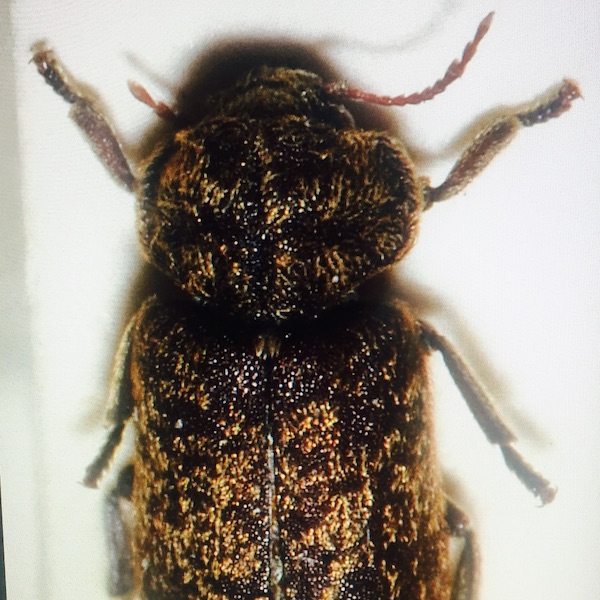
Species
Common Furniture Beetle (Anobium punctatum).
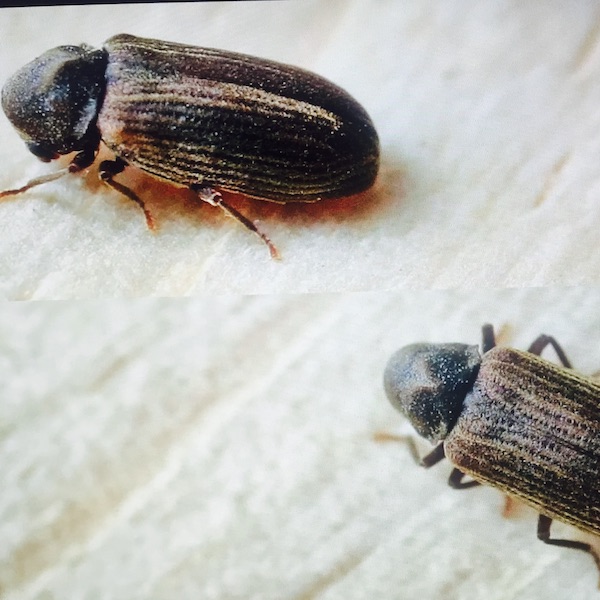
Species
Death Watch Beetle (Xestobium rufovillosum).
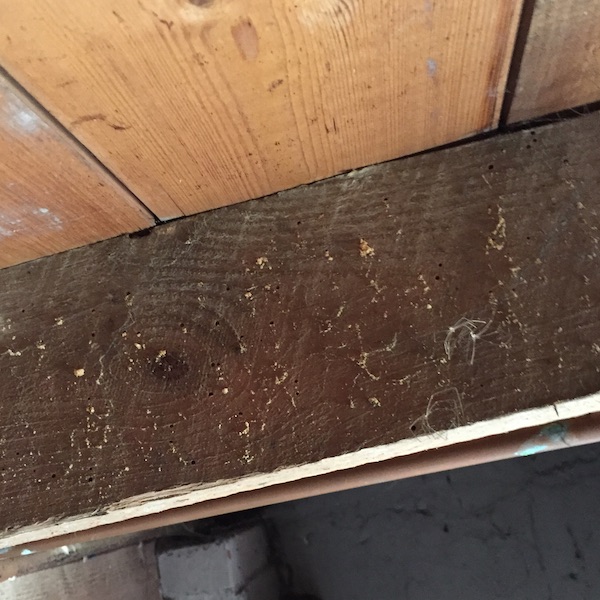
Damage
Typical Common Furniture Beetle damage to softwood floor joists.
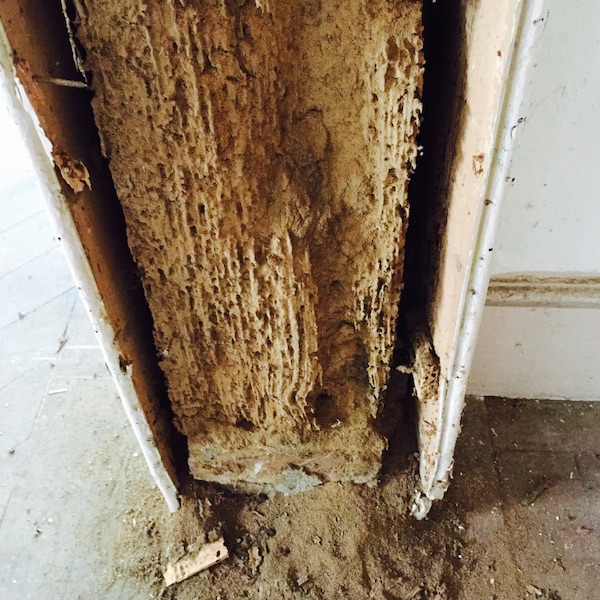
Damage
Death Watch Beetle damage to a previously concealed oak vertical post.
How we treat it
From identification to a treated, protected timber.
Inspection & identification
We identify the species involved and assess how far the infestation has spread, and whether it's active or historic.
Treatment programme
Affected timbers are treated with BBA-approved preservatives, applied in line with COSHH regulations and H.S.E guidelines.
Repairs where needed
Where structural timber has been weakened, we carry out repairs or strengthening works alongside the treatment.
Sign-off & guarantee
The finished work is backed by our guarantee — ask us for the specific terms that apply to your property.
Related services
Other issues we often find alongside wood borer damage.
Condensation Control
Ventilation, control vents, heat recovery units and Ebac dehumidifiers, delivered within 72 hours where needed.
Find out moreRising Damp Treatment
Chemical damp proof course installation and BS 6576:2005-compliant replastering for failed or missing damp courses.
Find out moreWet Rot & Dry Rot Treatment
Repairs, strengthening works and preservative treatment for timber affected by wood rotting fungi, to PCA and British Standard guidelines.
Find out moreFrequently Asked Questions
Find clear answers for Wood Borer Treatment.
What are the most common wood boring beetles found in Sussex properties?
What products does Bensleys use to treat wood boring beetle infestations?
How do I know if I have an active wood borer infestation?
Does Bensleys treat wood borer infestations in churches and older buildings?
Spotted exit holes or bore dust? Let's take a look.
No pressure, no hard sell — just an honest survey and a treatment plan that follows the right standards.