
Wet rot & dry rot treatment for Brighton & Sussex timbers.
Repairs, strengthening works and treatment for wood rotting fungi, conforming to PCA guidelines, British Standards, COSHH regulations and current building regulations.

Structural timber floor joists, joinery and features like window frames and door frames can be affected by different species of Wet Rot (Coniophora puteana is the most common) or by the more serious and prolific Dry Rot (Serpula lacrymans is the worst culprit). These types of wood rotting fungi commonly occur where there is a lack of subfloor ventilation, plumbing leaks, water spillage or flooding; they may also occur as a result of rising damp.
If left to manifest and spread, wood rotting fungi can cause substantial damage to your property. Bensleys offers a full range of options, including repairs, strengthening works and treatments and, where necessary, the use of suitable preservatives. All timber and masonry treatment of fungi conforms to PCA guidelines along with British Standards and COSHH regulations, to good building practice, and — where applicable — follows current building regulations. Bensleys can usually carry out all associated building works and repairs as required.
Why the distinction matters
Wet rot and dry rot need different treatment approaches. Wet rot is generally resolved by removing the moisture source and the affected timber. Dry rot needs a more thorough response, since its mycelium can spread through masonry as well as timber, well beyond where the damage is visible.
Species 01
Wet Rot
Coniophora puteana is the most common culprit, generally staying localised to timber with a persistent moisture source.
Species 02
Dry Rot
Serpula lacrymans is the worst culprit — more serious and prolific, capable of spreading through masonry as well as timber.
Common Causes
Moisture sources
Lack of subfloor ventilation, plumbing leaks, water spillage, flooding, or rising damp are the usual triggers for both types of rot.
From site
What wet rot & dry rot look like.
Real evidence from site, so you know what you're looking at before we arrive.

Wet Rot
Typical evidence of the wood rotting fungi Wet Rot Fibroporia vaillantii or similar poria related species.
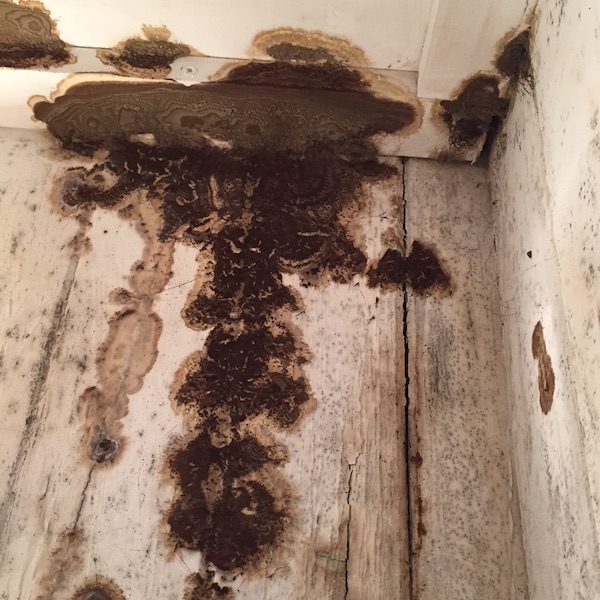
Wet Rot
Wet Rot growth, notably fruiting bodies (sporophores) most likely Coniophora puteana, affecting matchboard panelling.

Dry Rot
A large surface Dry Rot (Serpula lacrymans) fruiting body (sporophore).

Dry Rot
Dry Rot hyphae/mycelium growth and breakdown affecting the underside of flooring joists, with some ceiling lathes still remaining.
How we treat it
From survey to repaired, protected timber.
Survey & extent mapping
We identify the species involved and map how far it has spread, including checking adjoining masonry for dry rot.
Removal of affected timber
Timber beyond saving is removed, along with addressing the moisture source that allowed the rot to take hold.
Treatment & preservation
Suitable preservatives are applied where necessary, in line with PCA guidelines, British Standards and COSHH regulations.
Repairs & strengthening
Bensleys can usually carry out all associated building works and repairs as required, restoring the timber to full strength.
Related services
Bensleys can usually carry out all associated building works and repairs as required, restoring the timber to full strength.
Condensation Control
Ventilation, control vents, heat recovery units and Ebac dehumidifiers, delivered within 72 hours where needed.
Find out moreWood Borer Treatment
BBA-approved timber preservation for Common Furniture Beetle and Death Watch Beetle infestations, to COSHH and H.S.E standards.
Find out moreRising Damp Treatment
Chemical damp proof course installation and BS 6576:2005-compliant replastering for failed or missing damp courses.
Find out moreFrequently Asked Questions
Find clear answers for Wet Rot & Dry Rot Treatment.
What is the difference between wet rot and dry rot?
What causes wet rot and dry rot?
What standards does Bensleys follow when treating wood rotting fungi?
Does Bensleys repair the timber as well as treat it?
Found soft, crumbling or fungal-looking timber? Let's take a look.
The sooner wet rot or dry rot is identified, the less it costs to put right.