
Rising damp treatment for Brighton & Sussex properties.
A correctly diagnosed and installed damp proof course, finished with matching replastering — carried out to British Standard BS 6576:2005 and the PCA Code of Practice.

Rising damp can occur in buildings for a number of reasons. The existing damp proof course may be failing, perhaps due to raised external ground levels which allow bridging of the original damp proof course. In older properties, there may not be a damp proof course at all — something we see often in Brighton & Hove’s Victorian and Regency housing stock.
Bensleys carries out all rising damp treatments, including the associated replastering, following British Standard BS 6576:2005 and the Property Care Association (PCA) Code of Practice.
Why the standard matters
BS 6576:2005 sets out the accepted methods for testing, diagnosing and treating rising damp in the UK. Working to it — and to the PCA Code of Practice — means the treatment your property receives is independently recognised, not just a judgement call on site.
Cause 01
Failed damp proof course
Older chemical or physical damp courses degrade over time and stop performing their job, letting ground moisture back in.
Cause 02
Bridged by ground levels
Raised flower beds, paths or patios laid above the damp proof course give moisture a route straight past it into the wall.
Cause 03
No damp course installed
Many older Sussex properties were built before damp proof courses were standard practice, leaving walls permanently exposed.
From site
A real job, start to finish.
From the first signs of damage through to a finished, replastered wall — here's what a typical rising damp treatment looks like on site.

01 · Before
Evidence of rising damp affecting an external wall, damaging the decorations and plaster.
02 · Diagnosis
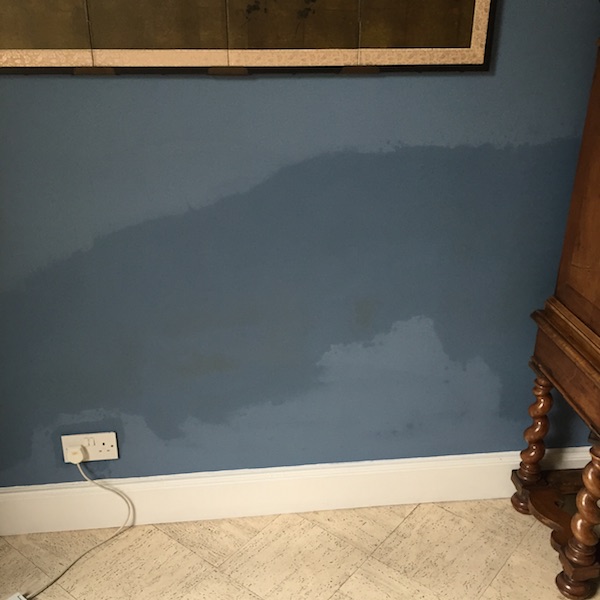
Damp staining from suspected rising damp affecting a newly painted wall.
03 · Treatment
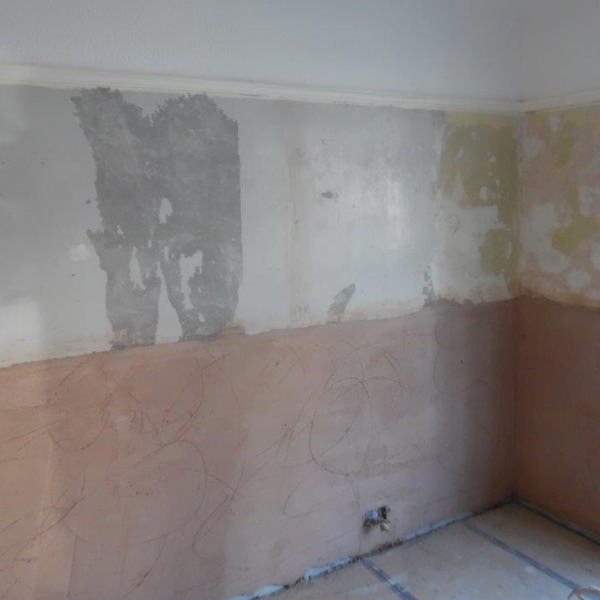
Subsequent to the installation of a damp proof course, first coat of replastering to the same elevation.
04 · Complete
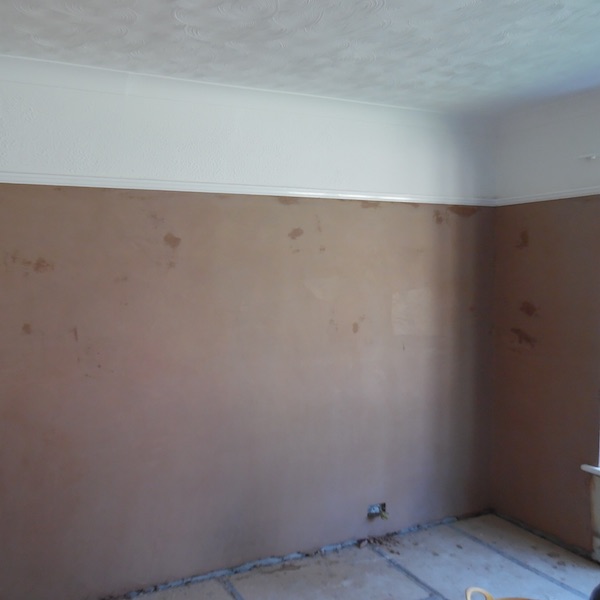
Complete replastering to the same elevation, as per Bensleys specifications.
How we treat it
From first survey to a finished wall.
Diagnostic survey
We inspect the affected wall, take moisture readings, and confirm this is genuinely rising damp rather than penetrating damp or condensation before recommending any treatment.
Damp proof course installation
A new chemical damp proof course is injected at the correct height, intercepting ground moisture before it can travel further up the wall.
Replastering
The wall is replastered to the same elevation using a breathable specification, following BS 6576:2005 and PCA guidance, ready for redecoration.
Sign-off & guarantee
The finished work is backed by our guarantee — ask us for the specific terms that apply to your property.
Related services
Other issues we treat alongside rising damp.
Condensation Control
Ventilation, control vents, heat recovery units and Ebac dehumidifiers, delivered within 72 hours where needed.
Find out moreWet Rot & Dry Rot Treatment
Repairs, strengthening works and preservative treatment for timber affected by wood rotting fungi, to PCA and British Standard guidelines.
Find out moreWood Borer Treatment
BBA-approved timber preservation for Common Furniture Beetle and Death Watch Beetle infestations, to COSHH and H.S.E standards.
Find out moreFrequently Asked Questions
Find clear answers for Rising Damp Treatment.
What causes rising damp?
What standard does Bensleys follow for rising damp treatment?
Does rising damp treatment include replastering?
How do I know if my wall has rising damp rather than another type of damp?
Think you've got rising damp? Let's get it surveyed properly.
No pressure, no hard sell — just an honest look at what's actually happening in your walls, and a plan to fix it.